Some people arrive with their case perfectly organised. They know the pattern, where it comes from and what they ought to do about it. And nothing has shifted in years.
It isn't bad faith. It's a very effective defence: while we're explaining, we're not feeling.
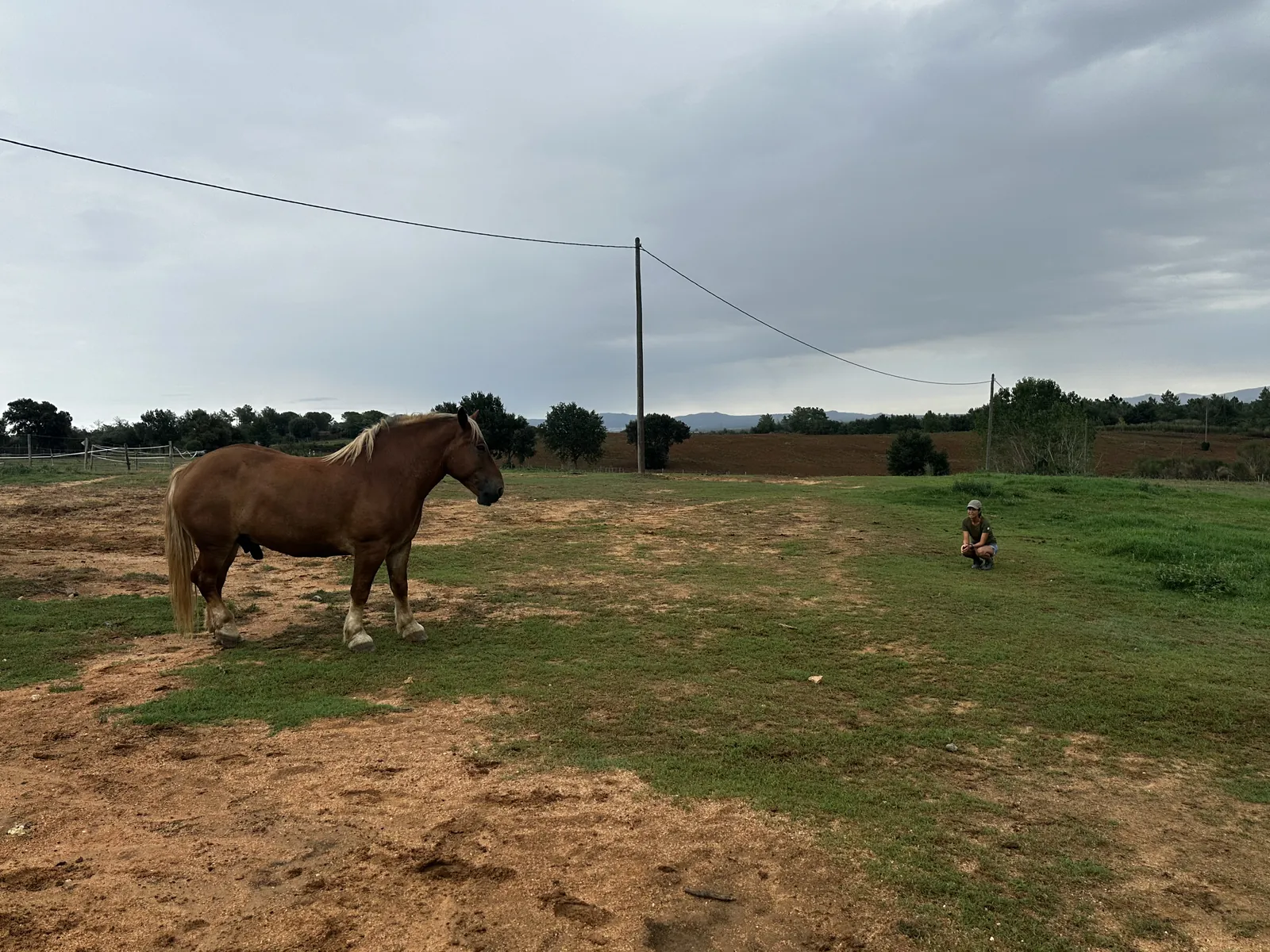
What a horse is doing here. The horse doesn't understand narrative. It reads breathing, arm tension, the rhythm of your steps, where your eyes go. Say you're calm when you're not and it will stand still, or walk away.
It's uncomfortable. But it's the first new piece of information that person has received in a long time, because it comes from an observable fact rather than an interpretation.
How it fits with office-based therapy. It doesn't replace it. It unsticks it. Two or three groundwork sessions are usually enough for a patient to return to the consulting room with fresh material, no longer filtered through the story.